


Email newsletters remain one of the most direct and measurable channels available to American businesses, creators, and marketers. They drive customer retention, lead nurturing, product launches, and even direct monetization. Yet behind the scenes of nearly every email service provider (ESP) lies a structural reality that shapes strategy more than many realize: newsletter caps.
These limits on subscriber counts or email send volumes are not arbitrary. They influence everything from when a growing creator must upgrade plans to how aggressively a B2B company can expand its nurture sequences. In 2026, with platforms frequently adjusting free and entry-level tiers, understanding newsletter caps has become essential for any US professional or decision-maker relying on email.
This review provides a clear-eyed examination of how newsletter caps work, why providers impose them, how major platforms compare, and—most importantly—practical ways to operate effectively within or around them. The goal is sustainable growth rather than reactive scrambling.
Key Takeaways
- Newsletter caps restrict either the number of subscribers on a list or the volume of emails that can be sent in a given period (monthly or daily), with rules varying significantly by platform and pricing tier.
- Free or low-cost plans often feature the tightest restrictions—Mailchimp’s free tier, for example, caps users at 250 contacts and 500 sends per month as of early 2026—while higher tiers or creator-focused platforms offer more breathing room.
- Caps exist primarily to manage infrastructure costs, protect sender reputation across shared IP pools, and create natural upgrade paths for ESP business models.
- Exceeding a cap can pause campaigns, trigger overage fees, or force unplanned upgrades, while poor list quality can indirectly harm deliverability even before numerical limits are reached.
- Disciplined practices such as regular list hygiene, segmentation, and re-engagement campaigns help maximize value within existing limits and often improve overall performance metrics.
- Platform selection should match current list size, 12–24 month growth projections, automation needs, and tolerance for feature restrictions rather than chasing the highest headline limits.
- A proactive, data-informed approach turns newsletter caps from potential obstacles into guardrails that encourage higher-quality audience building and more efficient campaigns.
Background and Context
Email marketing has matured into a sophisticated discipline for US organizations of all sizes. B2B companies use it for pipeline development, e-commerce brands for retention and repeat purchase, independent creators for audience monetization, and nonprofits for donor engagement. The channel’s strength lies in owned data and direct inbox access advantages that social platforms cannot fully replicate.
As lists expand from hundreds to thousands and then tens of thousands, the infrastructure required to send, track, and deliver messages at scale grows expensive. ESPs must maintain servers, deliverability infrastructure, spam-filter relationships, and compliance tooling. They also manage risk: a single poorly managed high-volume sender can damage reputation scores for everyone sharing the same infrastructure.
Newsletter caps emerged as a practical response. They allocate resources according to plan tiers, incentivize upgrades as users grow, and encourage senders to maintain engaged, high-quality lists. For users, these limits create both friction and focus. They reward thoughtful list-building over rapid, low-quality growth and push marketers to prioritize engagement metrics that actually protect deliverability.
In the current environment, caps are not going away. Understanding their mechanics allows professionals to plan upgrades, choose platforms strategically, and build campaigns that perform well within real-world constraints.
How Newsletter Caps Work Across Major Platforms
Newsletter caps generally fall into two categories: subscriber-based limits (total or active contacts stored) and send-volume limits (emails dispatched per day or month). Some platforms combine both. Counting methods also differ—some include every subscriber, while others focus only on active or engaged contacts.
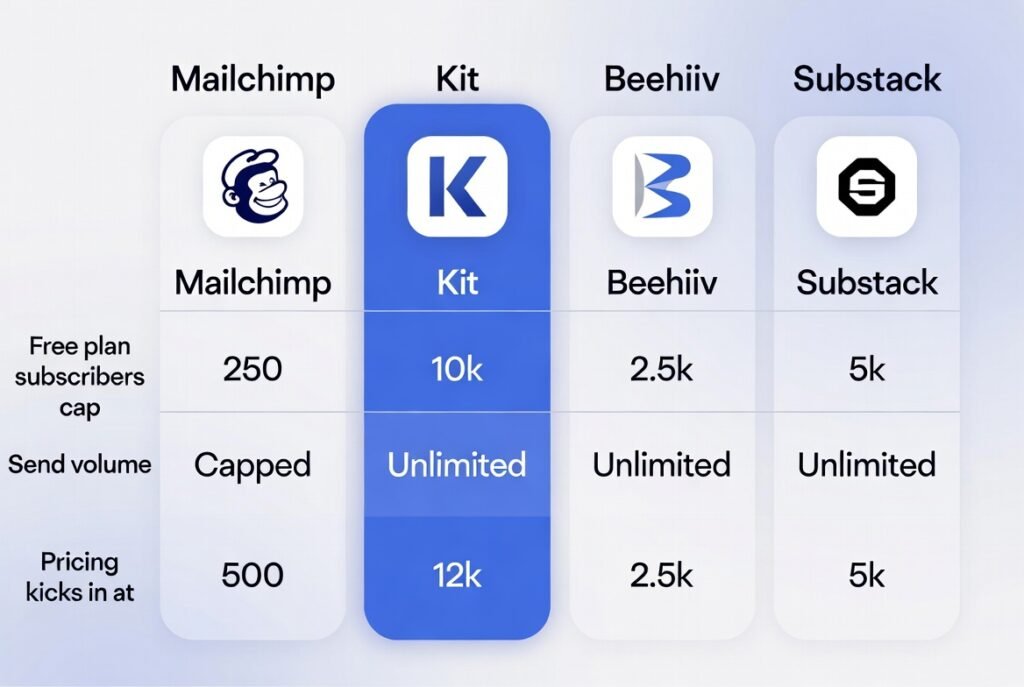
Mailchimp maintains one of the stricter free tiers in 2026. The free plan allows up to 250 contacts and 500 emails per month, with a daily send limit of 250. Exceeding these thresholds requires moving to a paid plan or purchasing credits. Higher tiers scale pricing primarily with contact volume and offer increased send allowances. This structure suits very small lists or testing but quickly becomes limiting for active US marketers or growing businesses.
Kit (formerly ConvertKit) takes a more creator-friendly approach with its free Newsletter plan. It supports up to 10,000 subscribers with unlimited email sends. However, advanced automations and certain monetization features are restricted until users upgrade to paid Creator or Pro plans. This model allows substantial audience building before financial commitment but may require an upgrade for sophisticated sequencing.
Beehiiv offers a free Launch plan up to 2,500 subscribers with unlimited sends. Beyond that threshold, users move into Scale or Max paid plans, which add features such as advanced analytics, custom domains, and monetization tools while continuing to scale subscriber limits into the tens or hundreds of thousands on higher tiers or Enterprise. The model balances generous entry-level access with clear upgrade incentives.
Flodesk operates on a subscriber-based paid model from the start, with plans beginning around $25 per month for up to 1,000 subscribers (annual billing discounts available) and scaling upward. It emphasizes unlimited sends and strong design capabilities rather than a robust free tier.
Substack follows a different philosophy altogether. It does not impose traditional hard subscriber caps on most newsletters. Growth is supported through its network and discovery features, while monetization occurs primarily through optional paid subscriptions (with Substack taking a revenue share). This structure favors creators focused on audience building and direct reader revenue over strict volume management.
Other platforms, including ActiveCampaign, Klaviyo, and high-volume transactional services like Amazon SES or SendGrid, offer different balances—often usage-based pricing or higher limits for technically inclined users willing to manage more of the infrastructure themselves.
Benefits and Strategic Advantages
Newsletter caps deliver several underappreciated benefits when viewed from a systems perspective. For ESPs, they align costs with usage and reduce the risk of deliverability problems caused by low-engagement or purchased lists flooding shared infrastructure. For users, they create natural checkpoints that encourage better practices.
Well-designed caps reward list quality. A marketer who regularly cleans inactive subscribers and segments audiences by interest often achieves higher open and click rates, which in turn protects sender reputation and can allow more effective sending within volume limits. Caps also discourage spray-and-pray tactics that damage long-term deliverability.
From a business planning standpoint, caps provide predictability. Knowing exactly when an upgrade becomes necessary allows finance and marketing teams to forecast costs and align platform changes with growth milestones rather than reacting to sudden service interruptions.
Finally, caps can indirectly improve campaign effectiveness. When send volume is constrained, teams tend to invest more in personalization, timing, and content relevance—factors that matter more for ROI than raw list size.
Also Read: Fameimpact.com: Review and Best Alternatives
Challenges, Risks, and Limitations
Despite their rationale, newsletter caps introduce real friction. Rapid list growth—common after a successful product launch, content viral moment, or paid acquisition campaign—can force unplanned upgrades or temporary pauses in sending. Overage fees or sudden jumps to higher pricing tiers can strain budgets, especially for bootstrapped creators or small teams.
Poor list hygiene compounds the problem. Inactive subscribers consume cap space without delivering engagement. Industry data consistently shows that lists with high percentages of disengaged contacts suffer lower open rates and can trigger spam-folder placement or throttling, even before a numerical cap is hit.
Migration between platforms adds another layer of complexity. Moving a list that has grown close to one platform’s cap can involve technical work, potential deliverability resets, and temporary disruption to sequences or automations.
Feature restrictions on lower tiers also matter. A platform may allow 10,000 subscribers but limit advanced segmentation or A/B testing, reducing the very tactics that improve engagement and justify staying on that plan longer.
Real-World Considerations for US Decision-Makers
For American professionals, several additional factors influence how newsletter caps play out in practice. Regulatory compliance under the CAN-SPAM Act requires accurate unsubscribe mechanisms and honest subject lines—requirements that remain non-negotiable regardless of plan tier. Some platforms build stronger compliance tooling into higher tiers.
Integration with broader US tech stacks also matters. Many organizations connect email platforms to CRMs (Salesforce, HubSpot), e-commerce systems (Shopify), or analytics suites. Lower-tier plans sometimes restrict API access or advanced tagging, limiting these connections.
Budget predictability is another priority. Finance teams prefer platforms with transparent pricing that scales smoothly rather than those with abrupt jumps or hidden overage charges. Forecasting 12–24 months of subscriber growth helps avoid both under-provisioning and overpaying for unused capacity.
Finally, deliverability reputation is a shared asset. Even if an individual campaign stays under volume caps, sending to disengaged segments can harm inbox placement for future sends. US marketers operating in competitive verticals (finance, health, SaaS) feel this pressure acutely because inbox providers apply stricter scrutiny to certain industries.
Best Practices and Actionable Strategies
Successful navigation of newsletter caps combines platform choice with operational discipline. The following approaches consistently help US teams and creators stay effective:
Prioritize list hygiene on a fixed schedule. Review and remove hard bounces, spam complaints, and long-term inactives (typically no opens or clicks in 6+ months) every three to six months. Re-engagement campaigns can win back borderline subscribers before removal.
Embrace segmentation and relevance. Smaller, highly targeted sends often outperform large generic blasts. Within a capped send volume, this approach improves engagement metrics that protect deliverability and can reduce the effective “cost” of each send in terms of reputation impact.
Choose platforms aligned with your growth stage and feature needs. A creator expecting to reach 8,000 engaged subscribers in the next year may prefer Kit’s generous free tier over Mailchimp’s tighter limits. A B2B company needing robust automation and CRM integration may accept earlier paid entry for better long-term tooling.
Monitor leading indicators, not just list size. Track engagement rates, spam complaints, and deliverability metrics alongside subscriber counts. These signals often warn of problems before caps become binding.
Plan upgrades proactively. Build upgrade costs and timelines into annual marketing budgets. Many platforms offer annual billing discounts that improve predictability.
Consider hybrid or supplementary approaches where appropriate. Some high-volume senders use a primary ESP for relationship-building campaigns and a separate transactional or high-volume service for receipts or triggered messages, keeping the main list within more favorable tiers.
Test and document. What works for one audience or vertical may not translate directly. Maintain internal records of deliverability performance across different segments and send frequencies.
Conclusion
Newsletter caps are a permanent feature of the email marketing landscape rather than a temporary inconvenience. They reflect real infrastructure and reputation-management costs while also creating incentives for better sender behavior. For US professionals and decision-makers, the key is not to avoid caps entirely but to understand them deeply enough to make informed platform choices, maintain high-quality lists, and scale with intention.
When approached strategically, these limits can support more sustainable and profitable email programs. They discourage the low-quality growth that ultimately harms deliverability and force teams to focus on the metrics—engagement, relevance, and list health—that drive real business results. In a channel where inbox placement and reader trust are everything, that discipline is ultimately an advantage.
The organizations and creators who treat newsletter caps as a planning input rather than an unexpected constraint will be best positioned to build durable, high-performing email audiences in the years ahead.
FAQs
What happens if I exceed my newsletter cap?
Most platforms will pause or limit further sends until you upgrade your plan, reduce your list size, or purchase additional credits. Some may allow temporary overages with fees. Always check your specific platform’s terms, as policies differ.
Do all email platforms have subscriber caps?
No. Some platforms, such as Substack, emphasize network-driven growth without traditional hard subscriber caps on the free or core experience. Most traditional ESPs do impose limits that increase with paid tiers.
How do newsletter caps affect deliverability?
Directly, they limit volume. Indirectly, lists that push against caps without proper hygiene often contain more inactive subscribers, which lowers engagement and can harm sender reputation scores—even if the numerical cap has not yet been reached.
Is it better to choose a platform with higher free limits or one with unlimited sends?
It depends on your priorities. Higher subscriber limits (as with Kit’s free plan) allow more audience building before payment. Unlimited sends (common on some creator platforms) remove volume pressure but may restrict advanced features until you upgrade. Evaluate both your list size trajectory and automation needs.
Can regular list cleaning really help me stay under caps longer?
Yes. Removing unengaged subscribers frees cap space and typically improves open and click rates. Many teams find they can maintain strong performance on lower tiers longer than expected by keeping lists lean and relevant.
What are clear signs I should upgrade my current email plan?
Consistent campaign pauses or warnings, declining deliverability despite good content, the need for advanced automation or segmentation that your current tier restricts, or reliable growth projections that will exceed limits within the next quarter are all strong signals.
Are there good alternatives for very high-volume or specialized needs?
Yes. High-volume or developer-focused options such as Amazon SES, SendGrid, or Postmark offer usage-based pricing with much higher (or effectively unlimited practical) limits, though they often require more technical setup and lack the polished marketing automation interfaces of mainstream ESPs.
How often should I review my platform’s terms regarding caps and pricing?
At minimum, review terms and your dashboard metrics quarterly, and always before major campaigns or list-building pushes. Platform policies can and do change, as seen with Mailchimp’s adjustments to its free tier in early 2026.