

In competitive gaming, raw mechanical skill and hours invested no longer guarantee consistent improvement. The difference between plateauing players and those who climb ranked ladders, contribute meaningfully to teams, or build sustainable content careers often comes down to how intelligently they approach damage output, role execution, and in-game decision-making.
Players Infoguide Dmgconselistas represents one prominent framework gaining traction among serious gamers and aspiring professionals. It combines rigorous damage optimization (“DMG”) with a strategist’s mindset (“Conselistas” advisors or tacticians). Rather than promising shortcuts or secret builds, it emphasizes a disciplined, analytical approach to gameplay that prioritizes efficiency, synergy, and adaptability over mindless grinding.
This article examines what the framework actually offers, how it works in practice, its measurable advantages for different player segments, and the real limitations that prevent it from being a universal solution. It also compares it with alternative resources and coaching models while providing practical guidance for individuals and organizations from solo ranked climbers to esports teams and gaming content creators evaluating whether and how to integrate this style of strategic thinking into their development process.
Key Takeaways
- Damage mastery is foundational but insufficient alone. Optimizing rotations, cooldowns, and elemental or critical interactions yields the largest single performance lift for most DPS-focused roles, yet it must be paired with team context and macro awareness.
- The “Conselistas” mindset shifts players from participants to tacticians. Treating every session as an opportunity for analysis and adjustment accelerates learning far more effectively than volume of play.
- Meta adaptation separates sustainable success from short-term spikes. Guides and frameworks that ignore patch cycles and evolving counters quickly become liabilities rather than assets.
- Communication and role clarity often deliver bigger team wins than individual mechanical upgrades. Many groups lose fights they could win simply because information does not flow efficiently between members.
- Over-reliance on any single guide or philosophy carries hidden costs. Players who treat frameworks as rigid scripts rather than flexible tools frequently struggle when the meta shifts or when opponents deviate from expected patterns.
- Integration with deliberate practice produces the strongest results. The most successful adopters use Dmgconselistas-style analysis to identify specific weaknesses, then drill those weaknesses in controlled environments rather than applying generic advice indiscriminately.
- Business and organizational parallels are instructive. Esports organizations, coaching services, and content platforms that adopt structured analytical approaches see clearer ROI on player development time and resources than those relying solely on intuition or volume training.
What Is Players Infoguide Dmgconselistas?
Players Infoguide Dmgconselistas is not a single downloadable app, proprietary software platform, or licensed coaching product with a login portal. It functions as a comprehensive strategic framework and philosophy popularized through guides, community resources, and coaching curricula. The name itself breaks down into two deliberate components: “DMG” refers to the technical optimization of damage dealing including rotations, resource management, critical strike timing, elemental reactions or synergies, and animation canceling where relevant. “Conselistas” draws from advisory or strategic thinking, positioning the player as an active analyst and decision-maker rather than a passive executor of pre-set actions.
The framework gained visibility in 2025 through detailed explanatory articles and community discussions that framed it as a response to inefficient playstyles common among both casual and aspiring competitive gamers. Its core premise is straightforward: most players improve faster by playing smarter rather than simply playing more. It targets titles with deep mechanical systems and team coordination requirements MOBAs, action MMORPGs, hero shooters, and certain live-service games with raid or PvP depth without being locked to one specific title.
In practice, the infoguide synthesizes publicly available data (patch notes, community theorycrafting, high-level replay analysis) into actionable principles. It encourages players to treat damage not as an isolated number but as one variable within a larger system of roles, communication, and evolving game states. This distinguishes it from pure build guides or tier lists, which often focus narrowly on gear or ability prioritization without sufficient emphasis on execution context or adaptability.
How it Works / Core Components
The framework operates through several interconnected layers that players apply sequentially or iteratively depending on their current bottlenecks.
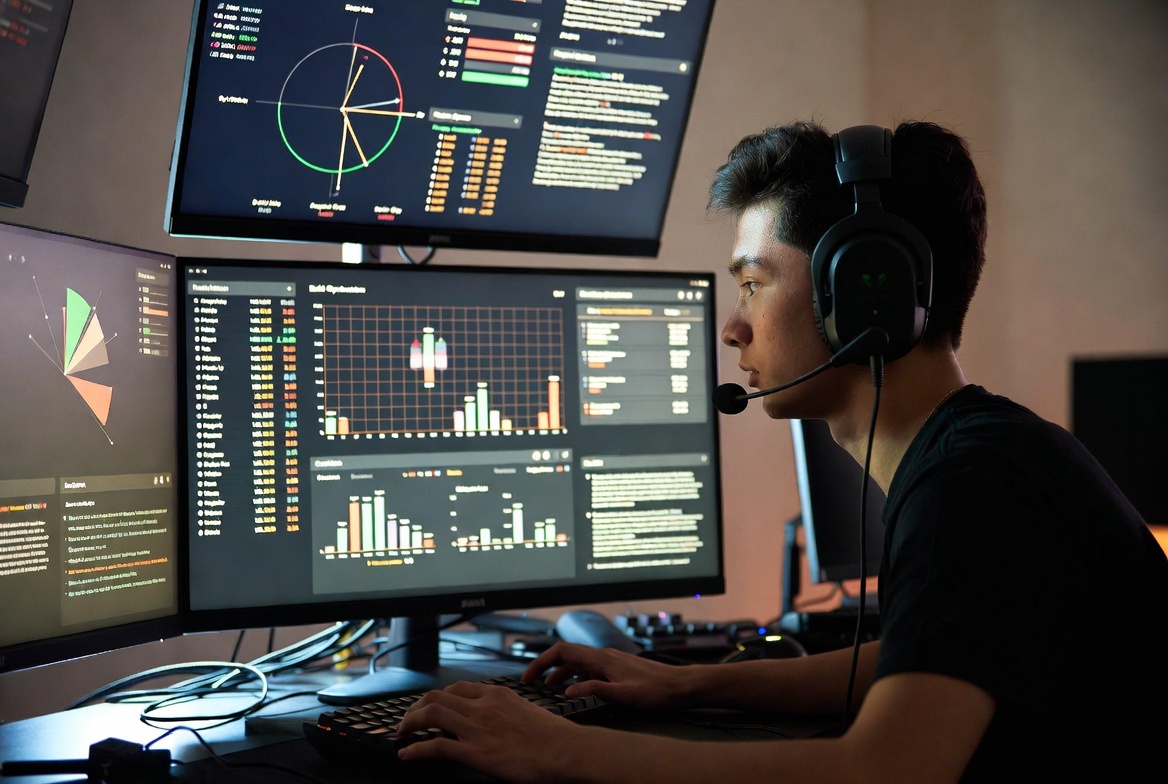
Damage Mechanics Layer. This is the most technical component. It breaks down how damage is calculated in a given game — base values versus scaling, critical hit chance and multiplier interactions, cooldown reduction breakpoints, animation canceling windows, and resource generation/consumption curves. Players learn to construct priority lists or rotation sequences that maximize output under realistic constraints (movement, positioning, incoming damage, ally buffs/debuffs). Tools such as community damage simulators or in-game training dummies become diagnostic instruments rather than mere practice aids.
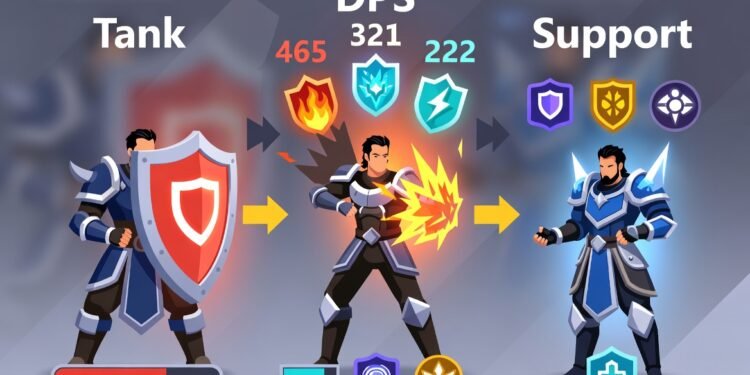
Role and Synergy Layer. Every participant is assigned clear responsibilities: tanks or frontliners manage threat and space; DPS players deliver optimized damage while respecting positioning requirements; supports provide utility, healing, or buffs on precise timings. The framework stresses that individual optimization only reaches full value when aligned with team needs. A high personal DPS number achieved by ignoring mechanics or overextending often produces net negative value for the group.
Communication and Information Flow Layer. Effective “Conselistas” players treat voice comms or ping systems as structured protocols rather than reactive shouting. They pre-define callout standards for cooldowns, ultimate availability, enemy positioning shifts, and objective timers. This reduces cognitive load during high-pressure moments and allows faster collective adaptation.
Meta and Patch Adaptation Layer. Because game balance changes frequently, the framework includes explicit processes for monitoring patch notes, testing new interactions on public test realms or custom games, and updating personal priority lists. Players who skip this layer quickly fall behind even if their mechanical execution remains strong.
Progression and Resource Management Layer. Gear choices, talent or skill tree decisions, and consumable usage are evaluated not in isolation but against specific encounter types or ranked environments. The emphasis is on understanding why a particular choice outperforms alternatives under given conditions rather than memorizing static rankings.
These components are designed to be applied in cycles: analyze current performance data, identify the largest gap (damage execution, positioning, communication, or adaptation), apply targeted adjustments, then re-measure.
Benefits and Advantages
When applied consistently, the Dmgconselistas approach produces several compounding advantages. The most immediate is accelerated skill acquisition. Players who analyze their own replays or use community tools to quantify damage contribution and decision quality often identify and correct inefficiencies that would otherwise require hundreds of additional hours of unstructured play to surface organically.
Team-oriented environments see particularly strong gains. Organizations and amateur squads that adopt shared frameworks for role clarity and communication protocols frequently convert close losses into wins without any individual player dramatically increasing mechanical skill. The reduction in miscommunication and redundant actions frees cognitive bandwidth for higher-order decisions.
For content creators and coaches, the structured nature of the framework provides clear scaffolding for educational material. Streamers and YouTubers can break down specific rotation segments or decision trees with transparent reasoning, building audience trust through demonstrated analytical rigor rather than personality alone. Esports teams gain a common vocabulary that speeds up review sessions and strategy meetings.
Longer-term, the emphasis on adaptability cultivates resilience. Players trained to treat patches and meta shifts as expected variables rather than disruptions maintain performance consistency across balance cycles. This is especially valuable in titles with frequent updates or seasonal ranked systems.

Risks, Limitations, and Potential Downsides
No strategic framework is without trade-offs, and Players Infoguide Dmgconselistas is no exception. The most significant risk is over-rigid application. When players treat recommended rotations or priority lists as immutable scripts rather than context-dependent tools, they lose the ability to improvise when opponents deviate from standard patterns or when unexpected variables (lag, teammate errors, unusual draft compositions) arise. Several high-level players have publicly noted that excessive guide dependence can blunt in-game intuition developed through unscripted practice.
Another limitation stems from the framework’s reliance on community data and theorycrafting. While these sources are often excellent, they can contain errors, outdated assumptions after patches, or biases toward certain playstyles or regions. Players who do not cross-verify with their own testing or high-level replay review may propagate suboptimal habits.
Accessibility presents a practical barrier. The analytical depth required to fully utilize damage optimization layers assumes a baseline comfort with spreadsheets, simulators, or at least detailed patch reading. Newer or more casual players can feel overwhelmed, leading some to abandon the approach before experiencing its benefits or to apply it superficially.
There is also a time investment reality. Constructing and maintaining accurate priority lists, testing builds, and reviewing personal performance data consumes hours that could otherwise be spent in actual matches. For players with limited playtime, the marginal return on heavy analytical work may be lower than simply playing more games with focused but lighter reflection.
Finally, the framework’s team-synergy emphasis assumes cooperative or semi-cooperative environments. In purely solo queue or highly toxic lobbies, the communication protocols and role alignment strategies lose much of their leverage, potentially leading to frustration when individual optimization cannot compensate for poor group coordination.
Comparison with Alternatives
| Approach | Core Strength | Primary Weakness | Best Suited For | Time to Noticeable Improvement | Cost Structure |
|---|---|---|---|---|---|
| Players Infoguide Dmgconselistas-style frameworks | Structured damage + strategy integration, adaptability focus | Can become rigid; requires analytical comfort | Serious climbers, teams, coaches | 2–6 weeks with deliberate practice | Mostly free (community) or low-cost coaching add-ons |
| Traditional wikis & tier lists | Quick reference for builds and counters | Often lack execution context or update lag | Casual players seeking immediate answers | Immediate but shallow | Free |
| Paid 1-on-1 coaching | Personalized feedback and accountability | Expensive; quality varies widely | Players with specific bottlenecks or pro aspirations | 1–4 weeks | $50–$200+ per hour |
| In-game analytics tools (e.g., built-in or third-party overlays) | Real-time or post-game data visualization | Limited strategic depth; can create information overload | Data-comfortable players who want metrics without external guides | Immediate data, slower interpretation | Free to subscription |
| AI-assisted build/rotation generators | Speed and accessibility for beginners | Black-box recommendations; limited adaptability | New players or those testing many characters quickly | Very fast setup, variable depth | Freemium or subscription |
The comparison shows that Dmgconselistas-style frameworks occupy a middle ground: more structured and adaptable than static tier lists, more scalable and affordable than constant personal coaching, yet more demanding than purely automated tools. Many successful players combine elements — using community frameworks for baseline understanding, analytics tools for measurement, and selective coaching for stubborn plateaus.
Key Considerations Before Using/Adopting
Individuals should first assess their current bottlenecks with honesty. If mechanical execution or basic game knowledge is the primary limiter, investing time in fundamentals or unstructured play may yield faster returns than deep analytical work. Conversely, players who already possess solid mechanics but feel stuck on consistency or team contribution often benefit most from the framework’s emphasis on decision quality and communication.
Time availability matters. The framework rewards deliberate, reflective practice more than raw volume. Players with only a few hours per week may achieve better results by applying lighter versions focused on one or two high-impact areas (e.g., cooldown tracking and basic role positioning) rather than attempting comprehensive optimization across all layers.
For organizations — esports teams, coaching businesses, or content platforms — alignment with existing culture and resources is critical. Teams that already conduct structured VOD reviews will integrate the framework more smoothly than those relying on informal discussion. Content creators should evaluate whether their audience responds better to analytical breakdowns or entertainment-first formats before committing heavily to Dmgconselistas-style content.
Finally, treat any framework as provisional. The most effective adopters maintain a healthy skepticism: they test recommendations in controlled environments, track personal or team metrics before and after changes, and remain willing to discard or modify elements that no longer serve current conditions.
Real-World Use Cases or Case Studies
An amateur five-stack in a popular MOBA adopted shared communication protocols and role-specific priority lists derived from Dmgconselistas principles. Over eight weeks they improved from mid-gold to low-platinum average rank while reporting significantly fewer “we should have won that” moments. The largest gains came not from individual damage increases but from reduced miscommunications during objective fights and faster recovery from early disadvantages.
A mid-tier esports organization incorporated analytical review sessions structured around damage contribution breakdowns and decision trees. Coaching staff reported that review meetings became more focused and less defensive, with players arriving prepared with their own observations rather than waiting for staff diagnosis. Win rate in scrimmages improved modestly, but more importantly, player retention and satisfaction with the development process increased.
A variety streamer specializing in ranked climbs began producing content that explicitly walked through rotation adjustments and meta adaptation reasoning using the framework’s language. Audience retention on educational segments rose, and several viewers reported measurable rank gains after applying the same diagnostic process to their own gameplay. The creator noted that the structured approach also reduced their own content burnout by providing clear topics week after week.
Best Practices or How to Use it Effectively
Start narrow. Identify the single largest performance gap — whether it is inconsistent damage uptime, poor ultimate timing, or weak objective decision-making — and apply the relevant layer of the framework to that area first. Broad application across every system simultaneously often leads to overwhelm and shallow adoption.
Combine analysis with deliberate practice. After identifying a rotation or decision pattern to improve, spend focused sessions drilling that pattern in isolation (custom games, training modes, or low-stakes normals) before reintroducing it into ranked or competitive environments. Measurement before and after the drill period validates whether the change produced the expected lift.
Maintain version control on your knowledge. Because patches alter numbers and interactions, schedule periodic reviews — ideally after every major balance update — to re-validate priority lists and assumptions. Players who treat their frameworks as living documents rather than static references stay ahead of the curve.
Balance individual optimization with team context. Even in solo queue, consider how your damage choices or positioning affect allies’ ability to execute their roles. In organized play, explicitly discuss and agree on communication standards and role priorities before matches rather than assuming alignment.
Use the framework as a diagnostic lens rather than a prescriptive script. When something goes wrong in a game, ask which layer failed: damage execution, role alignment, information flow, or adaptation to an unexpected variable. This targeted diagnosis leads to faster, more relevant corrections than generic “play better” self-talk.
Conclusion
Players Infoguide Dmgconselistas offers a valuable lens for gamers serious about measurable improvement. Its strength lies in bridging the gap between raw mechanical skill and intelligent, context-aware execution while emphasizing adaptability over rigid memorization. For players and organizations willing to invest the analytical effort, it can accelerate progression, improve team outcomes, and build more resilient competitive habits.
Yet it is not a panacea. Over-application risks replacing one form of autopilot with another. The framework works best when treated as one tool among several paired with deliberate practice, personal replay review, selective coaching, and an honest assessment of time constraints and current skill gaps. In an industry where both player development and content creation increasingly reward analytical rigor, approaches that systematize smart play without eliminating creativity or adaptability are likely to remain influential. The players and teams that extract the most value will be those who use the structure to inform judgment rather than to replace it.
FAQs
Is Players Infoguide Dmgconselistas a specific app or website I can download?
No. It functions as a strategic framework and methodology popularized through guides and community resources rather than a single proprietary platform. Players apply its principles using publicly available tools, replays, and patch data.
Which games benefit most from this approach?
Titles with deep damage mechanics, defined roles, and frequent balance changes — such as MOBAs, certain MMORPGs with raid or PvP depth, and hero-based shooters — see the strongest alignment. Purely casual or single-player experiences gain less from the team-synergy and meta-adaptation layers.
How long does it typically take to see improvement?
Most dedicated players notice clearer decision-making and modest performance lifts within two to six weeks when they focus on one or two specific layers and combine analysis with targeted practice. Larger gains in ranked or team environments usually require consistent application over one to three months.
Does this framework replace the need for mechanical practice?
No. It complements mechanical skill rather than replacing it. Players with poor execution fundamentals will still need to drill aiming, timing, and movement; the framework helps ensure that improved mechanics are applied to the highest-value actions.
How do I handle situations where my team refuses to coordinate?
Focus on the elements you control: your personal damage optimization, positioning that enables allies even without explicit calls, and concise, non-toxic information sharing. In highly uncooperative environments, the individual optimization layers still provide value while team-synergy layers have reduced impact.
Can content creators or coaches build businesses around this framework?
Yes, many have successfully done so by creating structured educational content, coaching curricula, or team development programs. Success depends on transparent methodology, regular updates for patches, and clear differentiation from generic tier-list or build content.
What is the biggest mistake new adopters make?
Treating the framework as a rigid checklist or script instead of a flexible diagnostic tool. The most common result is frustration when real games deviate from the idealized conditions assumed in guides.
How should I evaluate whether this approach is worth my time versus simply playing more?
Track a small set of personal metrics (average damage contribution, death timing relative to objectives, win rate in specific scenarios) for two weeks of normal play. Then apply focused elements of the framework for another two weeks and compare the same metrics. Objective before-and-after data provides the clearest signal.