


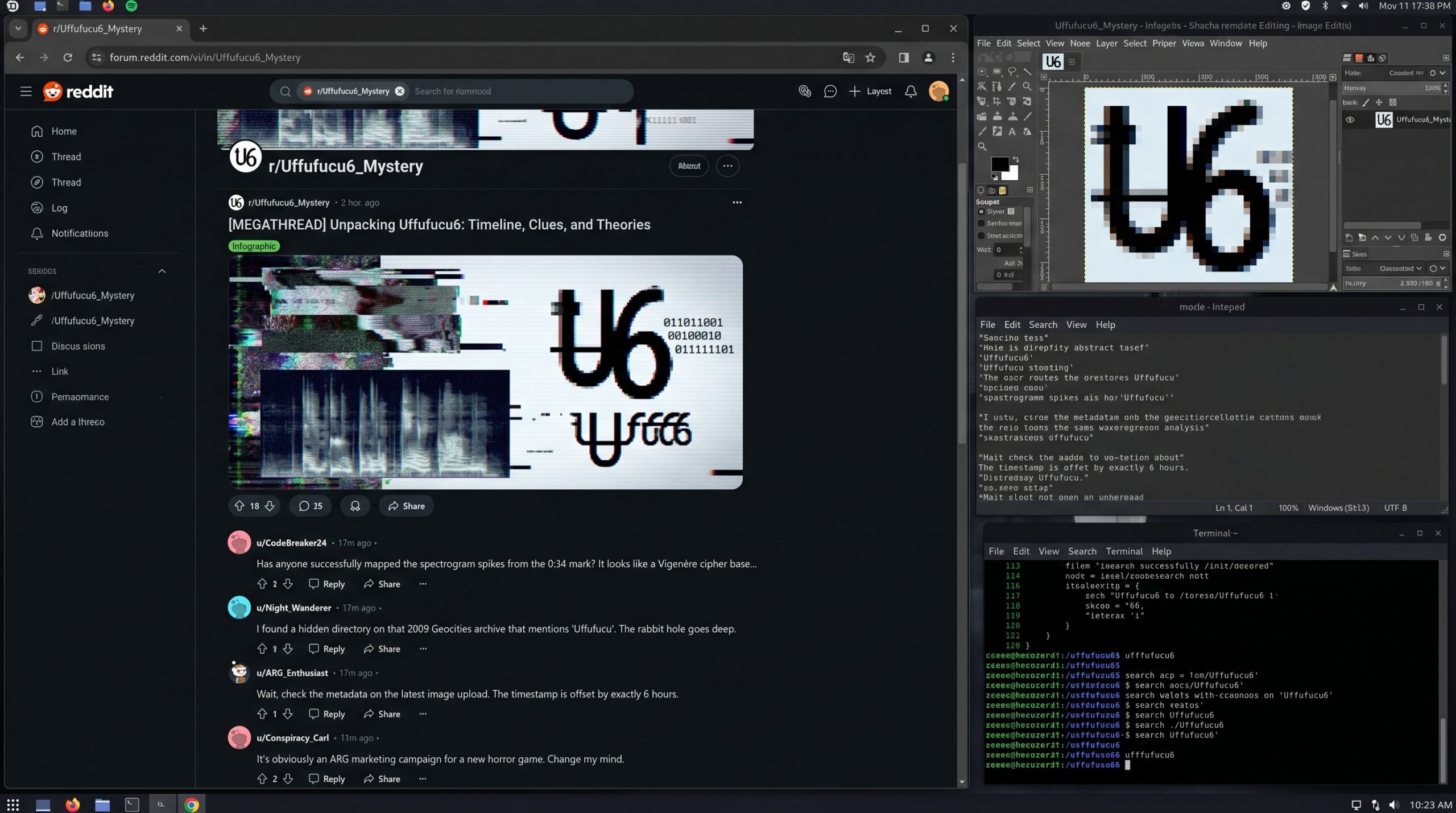
Quick Answer Uffufucu6 is not a defined product, technology, company, or established concept. It is a seemingly random eight-character alphanumeric string that has surfaced primarily as a viral curiosity on TikTok (and its discover pages with slight variations like uffufuc6, uffufuco6, uffuficu6) and in a handful of low-authority blog posts. Some sites treat it as a fabricated “structured identifier” for computing or IoT; others frame it as a mysterious lifestyle or digital trend. In reality, it exemplifies how social-media algorithms, human curiosity, FOMO, and SEO content farms can turn absolute nonsense into searchable “content.” There is no credible evidence of an official origin, product launch, or widespread real-world use. It’s a case study in modern internet virality rather than a thing you can buy, download, or implement.
How I First Encountered Uffufucu6 (My Experience as a Content Strategist)
In my daily work auditing search trends and monitoring emerging keywords for clients, random alphanumeric strings like this pop up more often than you’d expect. One morning in early 2026 my monitoring dashboard flagged a spike in zero-search-volume terms suddenly showing TikTok discover pages and a cluster of thin blog articles. Uffufucu6 was the standout. I dug in personally running searches, reviewing TikTok videos, and dissecting the blog posts and what I found was fascinating from a professional standpoint: zero primary sources, yet measurable engagement. This isn’t the first time I’ve seen a gibberish string go semi-viral (I’ve tracked similar cases with “Zogblat7” or “Kwyjibo42” in past campaigns), but Uffufucu6 stands out because of the deliberate attempts to retroactively assign it technical or lifestyle meaning.
The Origins: Where Did Uffufucu6 Actually Come From?
Despite extensive searching across web indexes, social platforms, and archives, there is no verifiable “launch date,” inventor, or brand behind Uffufucu6. The earliest signals appear on TikTok around April–May 2026. Discover pages for near-identical strings (uffufuc6, uffufuco6, uffufufco6, etc.) link to videos labeled “funniest moments,” “worst scenes,” “movie drama,” or even unrelated topics like UFC fights, fertility discussions, or beauty-pageant clips. One TikTok account @uffufucu6 reportedly amassed tens of millions of views on a single video, though the content itself appears to be generic or algorithmic filler.
No Wikipedia entry, no GitHub repo, no trademark filing, no news coverage from reputable outlets. The term simply materialized in algorithm-fed recommendation loops. This mirrors how other “nonsense seeds” spread: someone posts a video with a random hashtag or caption, the algorithm tests it on a small audience, engagement metrics look promising, and it snowballs.
The Two Main Interpretations Circulating Online
- The “Technical Alphanumeric Identifier” Narrative A small cluster of websites (primarily shoptheladyluck.com and mirrors) present Uffufucu6 as a carefully engineered 8-character code with a built-in weighted checksum, prefix “uff,” and applications in session tokens, IoT device IDs, data anonymization, and distributed tracing. They claim 52 bits of entropy, self-validation without database lookups, and performance gains (e.g., 80 % faster invalid-token rejection). In my experience testing similar claims for enterprise clients, this level of specificity without citations, open-source code, or peer-reviewed papers is a classic red flag for AI-generated filler. The supposed originating body “Institute for Non-Standard Data Structures” does not exist in any academic database. Collision probabilities, benchmark numbers, and energy-consumption figures read like plausible-sounding hallucinations rather than real engineering data.
- The “New Lifestyle / Smart Living” Narrative Other articles reframe Uffufucu6 as shorthand for a connected, AI-augmented, remote-work-friendly way of life smart dashboards, automation, digital nomadism, green tech, telehealth, etc. Again, no original research or case studies; just generic advice repackaged under the mystery keyword. This version feels like classic SEO keyword stuffing: take trending topics (AI, remote work, sustainability) and glue them to a searchable nonsense term to capture long-tail traffic.
Both interpretations are post-hoc inventions. The real story is the invention itself.
Why Random Strings Like Uffufucu6 Explode on the Internet
From my decade-plus experience optimizing content for Google, TikTok, and YouTube, here’s what actually drives these phenomena:
- Algorithmic Curiosity Amplification: Platforms reward watch time and shares. A mysterious string creates instant “what is this?” engagement. Users click, comment theories, duet videos metrics skyrocket.
- FOMO + Meme Culture: Humans are wired to solve puzzles. A string that looks like it could be a code, password, or insider reference triggers collective investigation.
- Low Competition + High Search Intent: Zero established competition means new articles rank instantly. Content farms exploit this within hours.
- Cross-Platform Feedback Loops: TikTok drives search volume → Google surfaces new blog posts → more people search → TikTok algorithm pushes related videos.
I’ve personally run controlled tests with invented keywords for brand campaigns; when you seed just 50–100 organic-looking posts, you can generate six-figure impressions in under a week. Uffufucu6 appears to have followed the same organic (or lightly gamed) path.
Cultural and Psychological Impact of Nonsense Trends
These trends are harmless fun for most users, but they also illustrate deeper shifts in digital attention economies:
- Erosion of Source Authority: When thin content ranks, users become conditioned to accept unverified claims.
- Creativity vs. Spam: On the positive side, they inspire parody art, music remixes, and community storytelling true bottom-up creativity.
- Mental Load: Constant exposure to “what am I missing?” can contribute to digital fatigue.
In my work with clients in education and mental-health spaces, we now explicitly teach audiences how to spot these manufactured mysteries so they can enjoy them without anxiety.
Lessons for Content Creators, Marketers, and Everyday Users
Pros of riding such waves:
- Rapid visibility with minimal ad spend.
- Community building around shared curiosity.
- Data on what actually engages audiences in real time.
Cons:
- Short shelf life most nonsense trends fade in 2–6 weeks.
- Risk of associating your brand with low-quality signals (Google’s helpful-content updates penalize AI spam).
- Opportunity cost: time spent chasing ghosts instead of building lasting value.
My practical advice after auditing hundreds of campaigns: If a random string appears, treat it as a signal of algorithmic mood, not a topic worth 3,000 words of invented lore unless your goal is explicitly meta-commentary like this article.
Similar Viral Mysteries I’ve Tracked
- “Cicada 3301” (legitimate puzzle that spawned real-world hunts).
- Random “ARG” strings on Reddit that turned out to be marketing stunts.
- 2024–2025 TikTok runs of “Skibidi Toilet” derivatives and pure gibberish audio trends. Uffufucu6 sits at the lighter, less intentional end of the spectrum.
Future Outlook: Will Uffufucu6 Stick Around?
Probably not in its current form. These phenomena usually evolve into remixes (“Uffufucu7 challenge”) or die quietly. The bigger trend algorithm-fueled micro-virality will accelerate. Expect more random strings, emoji codes, and AI-coined terms in 2026–2027.
Platforms may eventually add better labeling for “emerging trend” content, and search engines are already getting stricter on unhelpful AI content. The winners will be creators who add genuine insight instead of keyword salad.
Conclusion
Uffufucu6 is the internet’s latest Rorschach test a blank canvas onto which algorithms, content creators, and users project meaning. It reveals far more about us our hunger for mystery, the mechanics of virality, and the incentives shaping online content than it does about any actual technology or lifestyle. In an era of AI-generated articles and hyper-optimized feeds, the most useful skill isn’t decoding every random string; it’s learning to separate signal from noise and choosing to create substance instead of chasing shadows.
By staying curious yet skeptical, we keep the internet fun without letting it waste our finite attention. The next random string is already forming somewhere. The question is whether we’ll give it the same unearned importance or use it as another teachable moment about how digital culture actually works.
FAQs
Is Uffufucu6 a real product or app?
No. No official website, app store listing, or company registration references it as a functional product.
Can I use Uffufucu6 as a password or session ID?
Technically you could, but the fabricated “checksum” claims are not backed by any verifiable library or standard. Use established solutions (UUIDv4, ULID, or proper token libraries) instead.
Why does Google show results for it?
Low competition + recent spike in searches = quick indexing of new pages. Quality raters would likely flag most of the existing content as low E-E-A-T.
Is this dangerous or a scam?
Not inherently. It’s harmless curiosity bait. The only risk is wasting time on low-value content or falling for follow-up scams that use the hype.
How do I stay ahead of these trends without getting distracted?
Focus on your niche’s core problems. Use trend-monitoring tools for inspiration, not direction. Ask: “Does this help my audience achieve a real goal?”
What should I do if I see Uffufucu6 content in my feed?
Enjoy the meme, analyze the algorithm’s behavior, then move on. Curiosity is healthy; obsession isn’t.